
Group Sagun, which operates 18 facilities in Turkey and runs production plants in 3 different countries abroad, exports everything from tuna to gilt-head bream, from sea bass to salmon, reaching markets from Japan to the United States. Oğulcan Kemal Sagun and Nazlıcan Sagun Çiftçi, who are at the helm of the company, aim to increase fish consumption in Turkey.
AYLİN RANA AYDIN – Operating in the seafood industry for more than 60 years, Group Sagun encompasses 10 distinct companies within its structure. In addition to a wide range of products including tuna, gilt-head bream, sea bass, trout, and salmon, the company also exports items such as frogs, mushrooms, and snails, offering an extensive product portfolio.
The company operates in 5 different regions across Turkey with 18 facilities, and it also has production plants in 3 different countries abroad. Among its goals are initiatives aimed at increasing fish consumption in the domestic market.
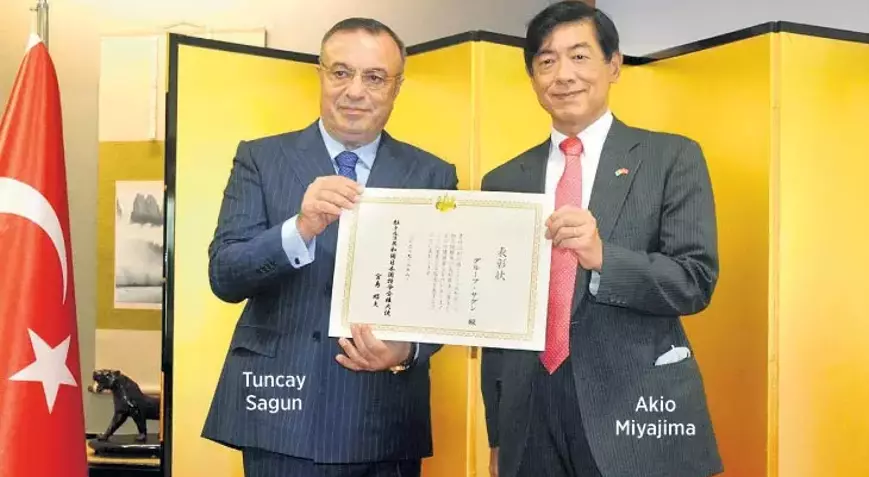
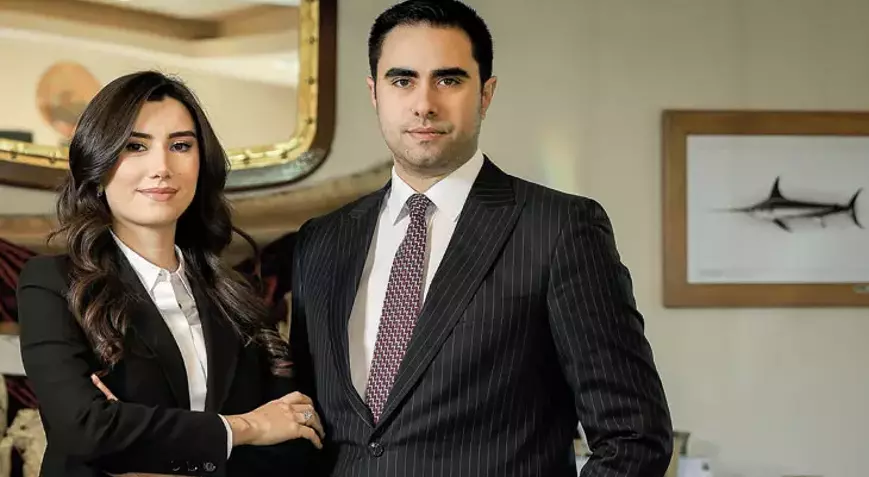
Oğulcan Kemal Sagun, Vice Chairman of the Board of Sagun Group, and Nazlıcan Sagun Çiftçi, Member of the Board, who took over the helm of the company from their father Tuncay Sagun, shared their objectives…
Could we hear the founding story of Group Sagun?
Oğulcan Kemal Sagun (OKS):
Although the official establishment date of Kemal Balıkçılık — which we can consider the flagship of the Group today — is recorded as 1988, our family’s journey in fishing goes much further back, to my grandfather’s export adventure in the early 1970s. Before him, his father was a fisherman who caught fish with a small boat — an amateur, meaning there was no concept of forming a company at that time.
Our grandfather, Kemal Sagun, learned that while he was selling salted anchovies to some intermediaries in Istanbul, there was demand from France for frog legs. As we were told, back in those days — the 1970s — exporting was not easy at all, and intermediaries handled many transactions by preparing the necessary declarations. With this information, my grandfather began field research and business development, having villagers in the Thrace region gather the many freshwater frogs found there. He then began shipping them first live, and later processed, to France and Switzerland.
This pioneering step marked an important turning point in our family’s seafood trade and can be considered the beginning of our export operations. Looking at our family background, our mother’s family also has deep roots in fishing; on my mother’s side, my grandfather operated purse seine fishing boats and a business in the Samsun Fish Market when we were children.
As a result, we are fourth-generation fishermen on both our mother’s and father’s sides.
Could you describe your operations as Group Sagun?
Nazlıcan Sagun Çiftçi (NSÇ):
The foundation of our company was laid with amateur fishing activities that began in Samsun, and today, Group Sagun has evolved into a structure that encompasses 10 different companies, operates in 5 regions across Turkey with 18 facilities, and maintains production plants in 3 different countries abroad.
Our philosophy is to directly contribute to the industrialization of fisheries in Turkey — a country surrounded by seas — and to lead the development of the sector. As a result of our more than 60 years of leadership in the seafood industry, we strive to supply the highest-quality seafood at the most competitive prices, consistently maintaining the same level of quality.
How was the year 2023 for you? What are your goals for 2024?
OKS: “In the past year, we carried out numerous projects to maintain our impressive performance in Turkey’s seafood exports. We especially focused on expanding our export portfolio. We strengthened our presence in key markets such as Japan, the United States, Europe, and the Arab region. During this process, we worked to further enhance our quality standards and provide our customers with top-tier service. In addition to all this, we prioritized our international investments.
As for 2024, our goals as Group Sagun are ambitious and far-reaching. First, we aim to further reinforce our commitment to sustainable production and environmentally friendly practices. We will continue our overseas investments to maintain our leadership in the seafood industry and expand into wider geographies.
In 2024, we will place greater emphasis on campaigns and awareness initiatives aimed at increasing domestic fish consumption. We plan to implement various projects to help bring Turkey’s fish consumption closer to European standards and contribute to the sector’s growth.
Started tuna farming in Tunisia.
Where do you raise your products?
NSÇ:
As Group Sagun, we have 18 facilities in different regions of Turkey, where we cultivate a variety of seafood products. At our aquaculture facilities located across 5 different regions, we produce species such as gilt-head bream, sea bass, tuna, salmon, and trout. In addition, we have also started tuna farming in Tunisia.
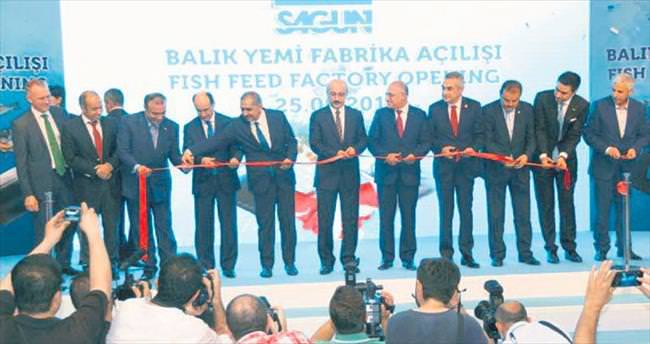
Our Istanbul headquarters serves as the main hub of the Sagun seafood market. In İzmir’s Urla district, we operate a seafood processing and storage facility, along with our gilt-head bream, sea bass, and bluefin tuna farms. In Aydın, our Biomar Sagun fish feed factory is in operation.
In Antalya, we have two seafood processing and storage facilities, as well as our sea bream and sea bass farms. In Sinop, we operate two seafood processing and storage plants as well as our Black Sea salmon farms. In Kayseri, we have rainbow trout and salmon facilities, as well as a hatchery for juvenile fish.
We also operate rainbow trout and salmon facilities in Kırşehir, Karacaören, and Tunceli. Additionally, we have seafood processing and storage facilities in Adana, İpsala, and Tekirdağ.
To which countries do you export?
OKS:
We export directly to many destinations around the world, especially Japan, the United States, Europe, Russia, and the Arab region. Japan, in particular, is an important market for us.
In which markets do your products attract the most interest?
OKS:
Gilt-head bream and sea bass—whether whole, filleted, or processed—are generally in demand in European countries, Russia, and Arab nations. Rainbow trout is especially popular in Russia and Balkan countries, sold whole, processed, or smoked. Black Sea salmon is in demand from many countries, particularly Russia, Japan, and the United States.
A large portion of our bluefin tuna is purchased by Japan, which is the world’s largest consumer of this product. However, with the global rise of the sushi industry, demand now also comes from the United States, Spain, and even Arab countries today. Niche products such as sea snails and matsutake mushrooms are primarily in demand in countries like South Korea, China, and Japan.
Japan consumes 80 kilos, while consumption in our country is only 5 kilos.
How do you evaluate the level of interest in seafood in Turkey?
NSÇ: “Unfortunately, interest in seafood in Turkey is still very limited. Although Turkey is one of Europe’s strongest seafood producers, our consumption levels are quite low. In the United States and EU countries, annual per capita consumption is around 25 kilograms, while in Japan this figure reaches up to 80 kilograms.
We supply one out of every three fish consumed in Europe, yet unfortunately our own population does not consume enough. Despite being a country surrounded by seas on three sides, annual per capita fish consumption in Turkey is only around 5–6 kilograms. However, we can still say that there has been a gradual increase over time.”
Although Turkey is surrounded by seas on three sides, seafood consumption is low. What is the reason for this, and what should be done to increase it?
OKS:
There are several reasons for this situation. First of all, seafood consumption is closely tied to cultural habits. Since traditional Turkish cuisine is predominantly meat-oriented, seafood tends to be overlooked. To change this, it is essential to raise awareness by introducing seafood through more diverse recipes and promoting these flavors to wider audiences.
In addition, organizing consumer-focused awareness campaigns that highlight the importance of seafood in terms of healthy nutrition and nutritional value is also crucial. As Group Sagun, we contribute to various projects aimed at increasing seafood consumption in Turkey.
“The principle that ‘a businessperson should have their lawyer on the right and their accountant on the left'”
You also have investments in solar energy. Could you tell us about them?
NSÇ:
We have begun preparations to establish a 9-megawatt solar power plant (SPP) in Antalya’s Elmalı district to meet the electricity needs of all our factories within Group Sagun. Our solar energy investments form a key part of our commitment to environmental sustainability and green energy.
The solar power plant project being developed in the Antalya Elmalı region will support our goal of minimizing environmental impact through clean energy production. Solar power plants help reduce our carbon footprint by decreasing the use of fossil fuels while also contributing to the local economy.
You are now in leadership as the 4th generation. How do you view working in a family business?
OKS:
Working in a family business is, for me, both a great responsibility and a great source of pride. 4. Taking part in the business as the new generation motivates me because it means carrying the responsibility of preserving and moving forward our family’s deep-rooted legacy. Working in a family company is not just a job; it is also about inheriting a heritage. In this process, we strive to internalize the experience passed down from previous generations, grow our company further, and remain a leader in the sector.
The most beautiful aspect of working in a family business is the strong bonds we build with the people we work with and our commitment to family values. This makes our work more meaningful and personal.
Did you always want to do this job, or did you have different dreams as well?
OKS:
Although I have always been interested in our family business since childhood, I also had different dreams and areas of interest. However, over time, the deep-rooted history of our family company, its leadership in the sector, and my passion for our work led me to pursue a career in this field.
NSÇ:
Like most people, I had different dreams and interests at various stages of my life. However, by the time I reached the age of preparing for university, I knew for certain that I wanted to study law and, at the same time, continue our family business.
Could you share the details of your education and professional life?
OKS:
After graduating from Saint-Joseph French High School, I completed my undergraduate studies in Economics at Sabancı University. To gain deeper knowledge and expertise in the field of aquaculture, I began my master’s degree in Aquaculture Management at Ege University. I am currently continuing my doctoral studies, during which I am working to develop an in-depth understanding of the sector and contribute to its advancement.
NSÇ:
I completed my high school education at Saint-Benoît French High School and graduated from the Faculty of Law at Özyeğin University. After completing my legal internship, I returned to our family business. Studying law had always been my dream. My father, Ahmet Tuncay Sagun, has a saying: ‘A smart businessperson has their lawyer on the right and their accountant on the left.’ I believe this mindset greatly encouraged me to pursue a law degree. I am currently responsible for the legal department within the company.
Preparing for the future with a family culture
What have you learned from your father, Mr. Tuncay? What will you do to carry the flag even further?
OKS:
I have learned many valuable things from my father, Ahmet Tuncay Sagun. First, I was inspired by him in terms of overcoming challenges in the business world, taking responsibility, and demonstrating determination. With his bold steps, he fought to achieve success and position the company as a leader in the industry.
I also learned the importance of building a sustainable business model, valuing employees, and ensuring customer satisfaction by maintaining high quality standards.
To carry our family company’s flag even further, I have set several goals. I plan to remain a pioneer in the sector through sustainability-focused projects built on technology and science. Additionally, attracting younger generations to the industry and mentoring them by sharing my experiences is an important goal for me.
How have you planned the division of responsibilities as the new generation? How are you preparing the next generation?
NSÇ:
As the new generation, we have created a series of strategic plans and a division of responsibilities to shape the future of our family business, Group Sagun, and to strengthen it even further. This approach aims not only to sustain our business but also to reinforce our leadership in the sector.
In our family, the division of responsibilities carries a special meaning that highlights the importance of working together and supporting one another. My father’s teachings and our family values have instilled in us the understanding that each of us should focus on our own strengths and collaborate to grow and fortify the company.
The family culture our father instilled in us guides the way we work as a team, ensuring that we continue to build on the strong foundation laid by previous generations.
Culture also plays an important role in preparing the next generation. We would like our own children to work together within a division of responsibilities just as we do.
Increasing employment through vocational high schools
What are Group Sagun’s social responsibility projects?
NSÇ:
One of my father’s greatest dreams was to open a Vocational High School focused on fisheries. In line with this dream, we have begun working on the project. With the education to be provided at the Vocational High School, we aim to address one of the biggest gaps in the sector: training qualified and knowledgeable personnel. We also plan to offer employment opportunities to graduates. We hope to bring this project to our country and our industry as soon as possible.